Packaging Sample Guide
Choose a packaging sample by the decision it must approve.
A sample is useful when its purpose is written down. Structure, product fit, artwork, color, material, finish, assembly, packing, and production consistency may require different evidence.
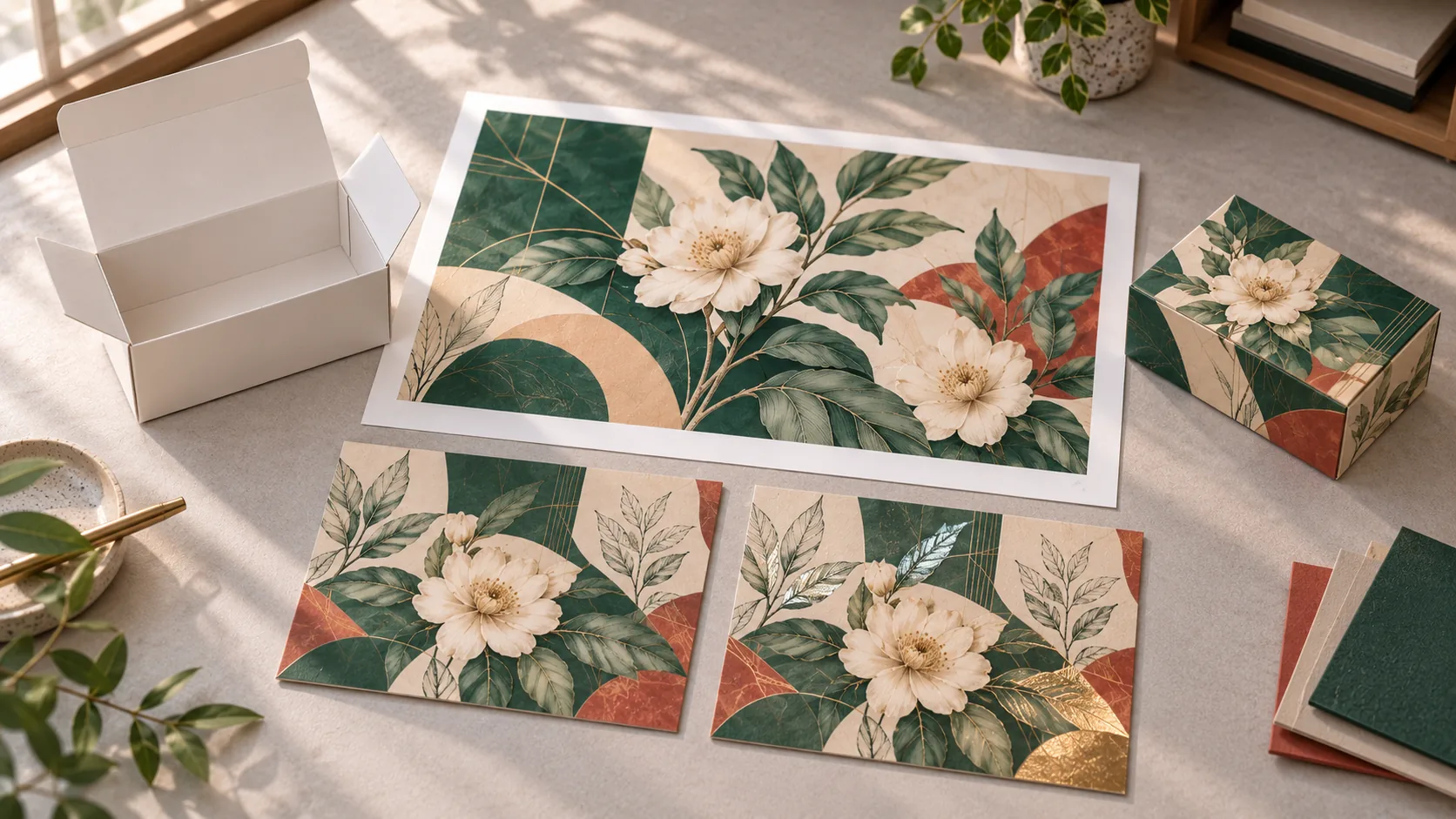
Illustrative packaging concept.
What each sample can and cannot prove
A controlled approval sequence
Name the risk
Fit, content, structure, material, color, finish, assembly, packing, or production reference.
Choose evidence
Use the lowest-cost proof or sample that can answer the next decision.
Record the basis
Dieline, artwork, specification, physical reference, revision, date, and owner.
Approve clearly
Approve, reject, or approve with named changes and unresolved items.
Sample approval checklist
- Files: confirm the current dieline, artwork, specification, revision, and date.
- Dimensions: record finished dimensions and whether they are internal or external.
- Function: compare fit, opening, closure, folds, glue, insert, assembly, and removal.
- Appearance: identify the approved material, color, finish, and physical references.
- Versions: check artwork content, barcode, legal copy, language, and SKU mapping.
- Packing: record flat or assembled form, unit protection, master-carton quantity, and labels.
For a paper bag, review the agreed physical sample with the intended contents to check filled fit, base stability, and handle attachment. See the paper bag planning page for the other details to specify before a quote.
Frequently asked questions
Which sample should come first?
Choose the sample that answers the largest current risk. Use a structural sample for fit, a controlled proof for artwork, and a physical reference when material, color, or finish is the decision.
Does a PDF approve the finished package?
No. It normally approves content, placement, and revision. Physical size, material, fit, production color, finish, assembly, and packing need separate evidence.
Is a digital sample the same as production?
Not necessarily. Ask which printing and finishing process made the sample and which differences may remain in production.
When should production timing begin?
The quotation should state the trigger, such as approved artwork, approved sample, confirmed specification, material availability, commercial terms, and payment.
Cartonary arranges the agreed sample. Sampling is generally completed within five working days; a simple print-only sample may be completed in one or two days. Sample type, price, schedule, shipping, included revisions, and approval conditions are confirmed for each project in the quotation.
Packaging Buyer Guides
Continue with the next packaging decision.
Compare structures, cost and MOQ factors, sample types, measurement, and artwork preparation in the buyer guide center.