
Packaging Buyer Guides
Practical guides for your next packaging project.
Compare box types, understand cost and order quantities, choose samples and prepare dimensions and artwork. Start with the question you need to answer; you do not need a finished specification to contact us.
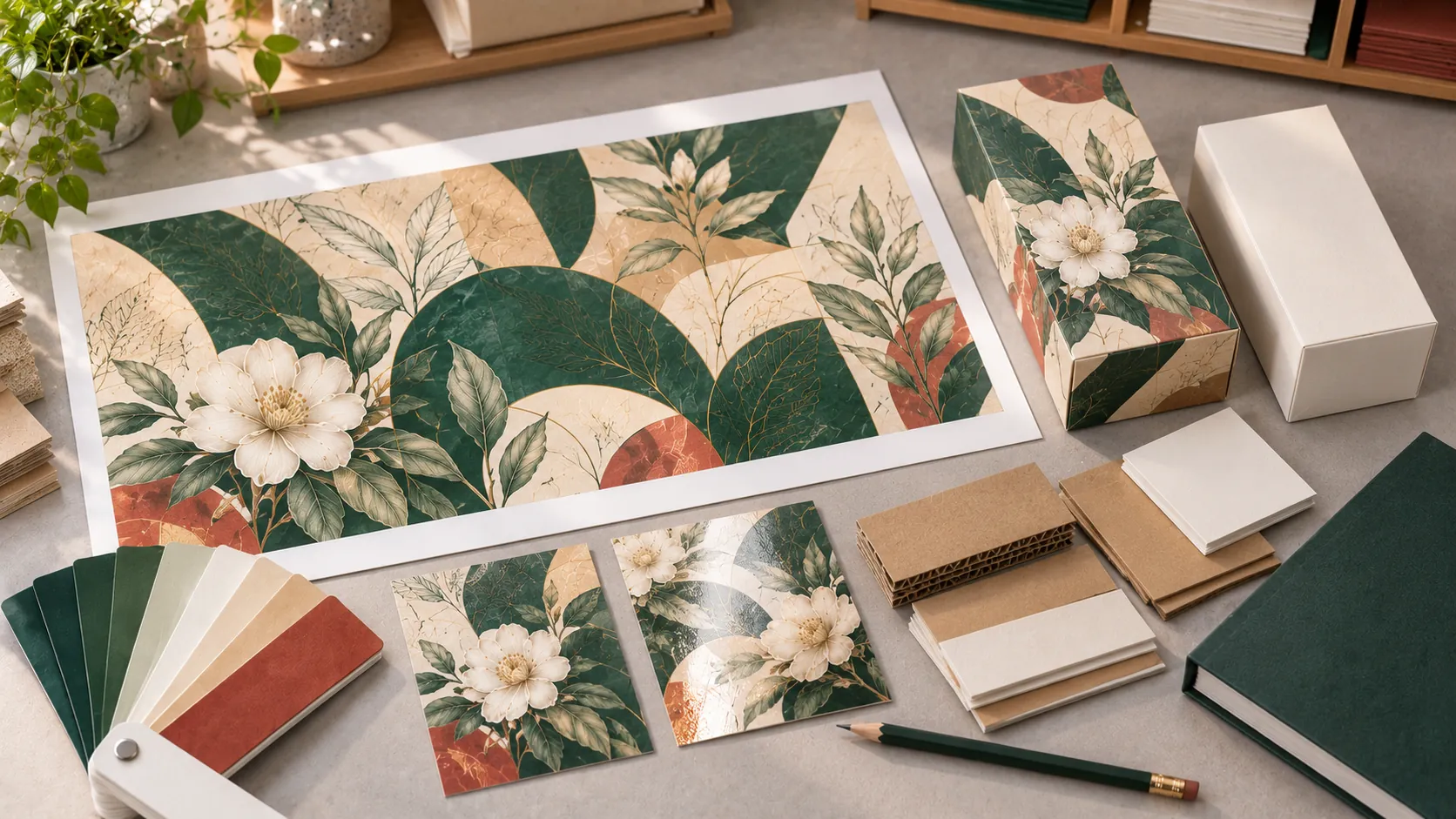
Illustrative packaging concept.
Choose the question your team needs to answer next.
Folding cartons, mailer boxes, or rigid boxes?
Compare construction, protection, presentation, storage, packing, and shipping implications.
What changes custom packaging cost?
Review size, structure, material, printing, finishing, tooling, packing, quantity, and freight assumptions.
What changes a custom packaging MOQ?
Understand how one confirmed specification shapes the practical minimum order.
Which packaging sample should you approve?
Match proofs, structural samples, printed prototypes, references, and production samples to the decision.
How should a product and box be measured?
Record product size, orientation, clearance, and internal or external box dimensions without ambiguity.
What belongs in a packaging artwork package?
Control dielines, bleed, safe areas, colors, images, fonts, finishes, barcodes, and revisions.
Planning a bag, label, or insert?
Start with the product requirements, then use the guides above to plan artwork, samples, and the quotation.
Plan a custom paper bag
Record the intended contents, finished size, handle choice, expected filled load, artwork, quantity, and packing form for a project review.
Plan labels or paper inserts
For labels, identify the application surface and artwork versions. For paper inserts, describe product fit, placement, and assembly needs.
Take an artwork checklist into your next review
Keep one record of the artwork revision, supplier-confirmed settings, proof references, open questions and release decision. Fill it in a PDF reader or print it for your project team. Production settings must come from the agreed project specification.
2 pages · Fillable PDF · 29 KB · Version 1.0, September 2026. Save a local copy before filling it in.
Use one controlled specification.
Define
Product, dimensions, quantity, variants, destination, timing, and packaging role.
Compare
Structure, material, print, finish, setup, sample, packing, and delivery assumptions.
Approve
Current dieline, artwork, physical references, revision, and named decision owners.
Release
Inspection basis, unit packing, master cartons, documents, and shipment responsibility.
Project facts still belong in the quotation.
These guides explain decision factors. They do not set a universal minimum order, price, sample timing, production timing, material availability, tolerance, certification, test result, or shipping commitment.
Keep structure, dimensions, size basis, material direction, print, finish, variants, sample scope, packing, destination, and delivery responsibility consistent when comparing suppliers. Record every change before comparing price or timing.
Confirm all commercial and production terms for the exact structure, material, artwork, quantity, destination, and responsibility scope.