
Box Structure Comparison
Folding cartons, mailer boxes, or rigid boxes?
Choose the structure by the job it must do. Product weight, distribution route, packing method, presentation, storage, inserts, and outer protection all change the answer.
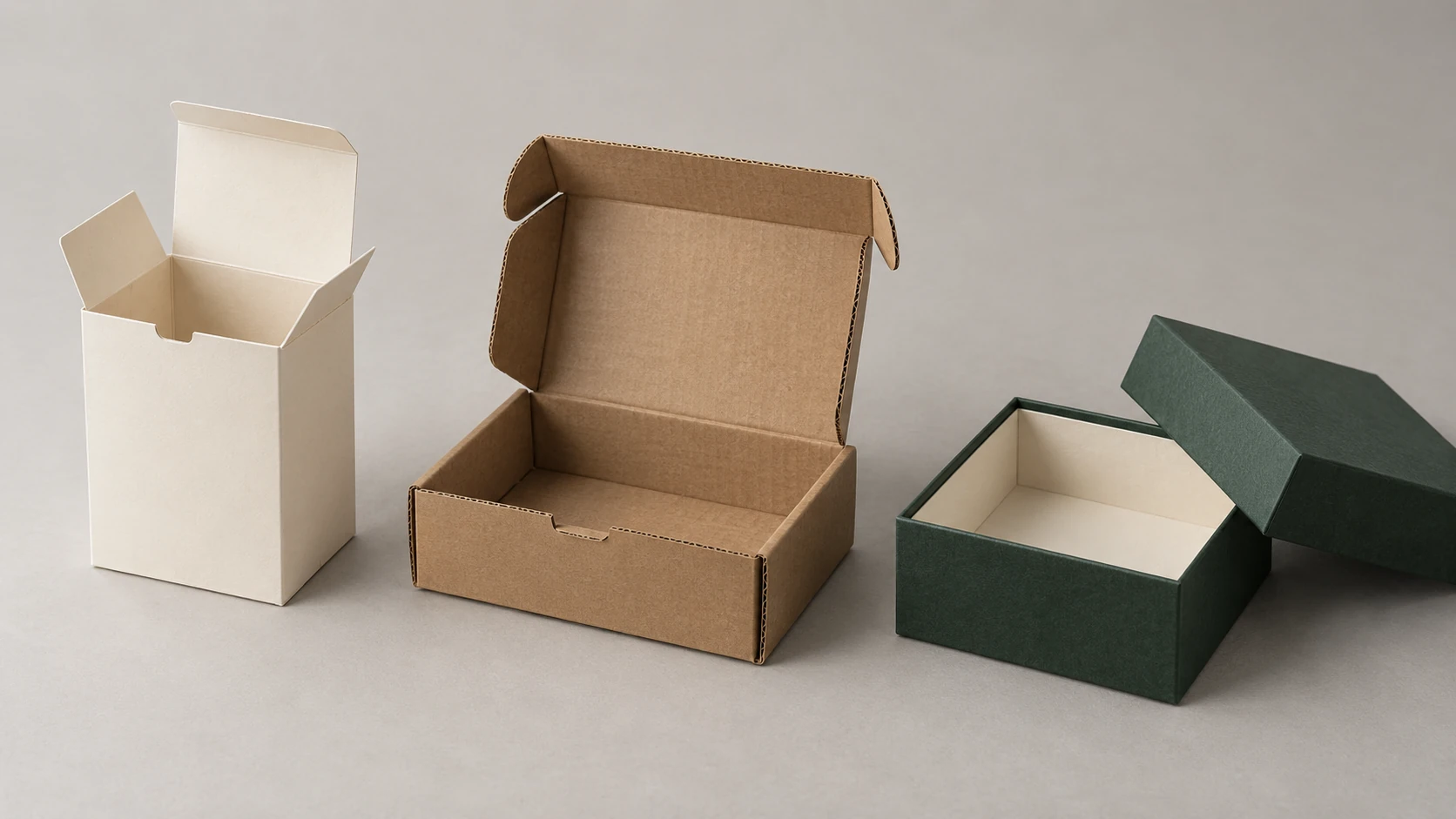
Illustrative packaging concept.
Quick comparison
This comparison is directional. Board grade, structure, inserts, packed weight, handling route, and agreed testing determine actual performance.
Review each structure in more detail
Custom folding cartons
Review flat supply, filling, printed panels, inserts, and the boundary between retail presentation and shipping protection.
Custom corrugated mailer boxes
Review board, closure, product restraint, printed surfaces, and the complete packed delivery route.
Custom rigid gift boxes
Review opening, wrap, insert, surface protection, assembled volume, and outer shipping needs.
Choose by packaging role
Retail or inner carton
A folding carton can provide a printable retail surface around a bottle, tube, tray, pouch, or protected product. Confirm closure, product weight, pressure points, insert need, packing speed, and shelf orientation.
Parcel or subscription pack
A corrugated mailer can combine shipping protection with a controlled opening sequence. Confirm flute and board direction, product movement, closure, labels, tear strips, master-carton packing, and dimensional weight.
Gift or presentation set
A rigid box can support wrapped edges, lift-off lids, book-style openings, drawers, or shoulder-neck structures. Confirm wrap paper, corner quality, insert removal, accessories, surface protection, and outer shipping needs.
Combined system
Presentation and logistics can use separate layers: a folding carton inside a corrugated shipper, a rigid box inside an outer carton, or a mailer with a sleeve. Count the material, assembly, packing, and freight effects of every layer.
A practical selection sequence
Route
Define retail shelf, storage, gifting, parcel handling, freight consolidation, or several roles.
Product
Record maximum dimensions, weight, orientation, fragile areas, leakage, scratching, and accessories.
Packing
Explain how the package is erected, filled, closed, labeled, inspected, and placed into master cartons.
Evidence
Approve fit with a structural sample and agree route-appropriate packed-product checks where protection matters.
Compare the complete delivered system
The empty package unit price is only one input. Include tooling, printing, finishing, inserts, assembly, packing labor, storage, master cartons, dimensional freight, and the cost of additional protective layers. A flat carton may save space. An assembled rigid box may increase volume. A mailer that performs as the shipper may remove another layer, but only if the product and route support that decision.
Also compare what happens after delivery. A folding carton must be erected and closed consistently. A mailer needs a clear packing and sealing method. A rigid box arrives assembled but may require surface protection, larger cartons, and more storage. Record packing time, workstation limits, label placement, unit protection, master-carton quantity, and the expected opening experience before selecting the structure.
Information to send for a useful comparison
- Product dimensions, weight, orientation, photographs, and vulnerable points.
- Packaging role: retail, gift, storage, parcel shipping, or a combination.
- Quantity by version, destination, shipping method, and requested delivery responsibility.
- Opening, closure, insert, accessory, print, color, and finish requirements.
- Reference package, dieline, retailer requirement, and any required test basis.
Frequently asked questions
Which structure costs least?
There is no universal answer. Compare the same product, dimensions, material direction, printing, finish, insert, quantity, packing, and delivery scope.
Can a rigid box ship without an outer carton?
Its decorative surface may still be damaged in parcel handling. Review the packed product and route before deciding whether an outer shipper is required.
Can a folding carton protect a fragile product?
It can contribute when structure, board, insert, and outer protection are designed together. Confirm performance with the actual packed product.
Are mailer boxes only for ecommerce?
They can also hold kits, samples, subscription sets, and retail-ready packs. Their fit depends on protection, print, packing, and route requirements.