
Custom Rigid Gift Boxes
Custom rigid gift boxes for products and gift sets.
Build a presentation box around the way your product is revealed and removed. Compare opening styles, paper wraps, finishes and fitted inserts, with samples to check the combination before production.
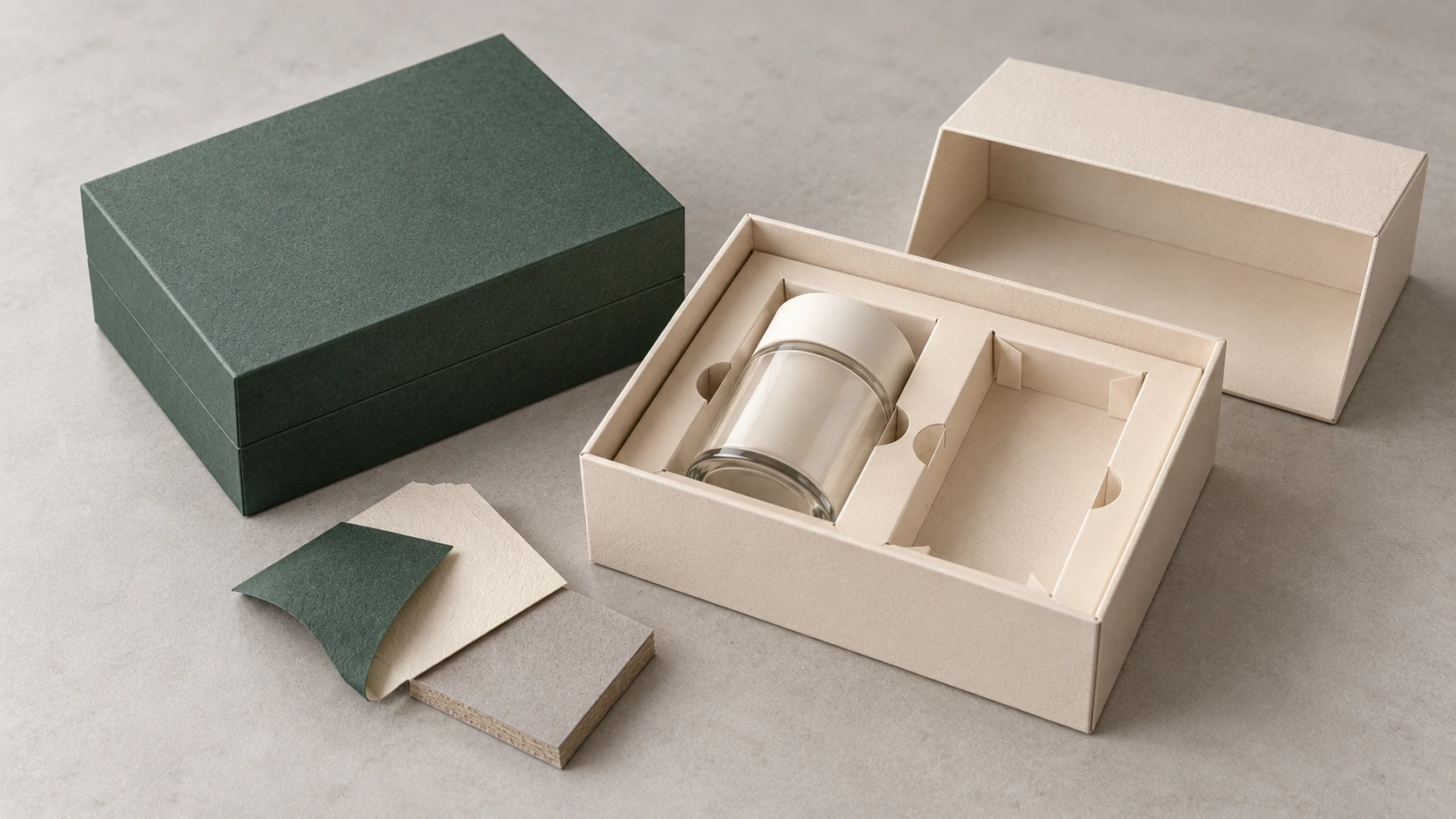
Plan the opening and the packed product together
Start with what the buyer sees and removes: lid or door, product, insert, accessories, instructions, and protective layers. A box may look balanced when empty but feel tight, shift in transit, or make the product hard to lift out. Use the actual item and intended insert for fit review.
Presentation packaging is not automatically a parcel shipper. Decorative wraps, edges, and finishes may need unit protection and an outer carton. Account for assembled-box volume, master-carton limits, and the delivery route when comparing total cost.
Opening experience
Consider a rigid structure when the box’s shape, lid movement, reveal, and product arrangement are central to the presentation.
Fitted sets
Map each component’s size, weight, removal order, and restraint before deciding on a tray, divider, or other insert.
Surface quality
Review wrap alignment, corners, color and finish references, scuff risk, and how boxes will be protected during packing.
Volume trade-off
Assembled boxes can use more space in storage and freight. Compare that cost with the presentation role before choosing a structure.
Where this box sits in the packaging system
Read from the outer layer toward the packed product. Each layer is reviewed against the product and delivery route.
Structure at a glance
Structure, material, and finish options
Use these options to start a project discussion. The workable combination is confirmed against your product, quantity, artwork, and delivery needs.
Available materials, structures and finishes depend on your product and order. We confirm the workable combination, price and schedule in your quotation.
Order size, samples, and production planning
How your order takes shape
Arrange
Share product dimensions, weights, set contents, quantity, destination, and opening references.
Compare
Review structure, board, wrap, insert, finish, storage, and shipment volume.
Approve
Check a suitable structural or printed reference for fit, opening, surface, and artwork position.
Protect
Record surface inspection, unit packing, master cartons, and delivery responsibility.
Frequently asked questions
Can a rigid box ship directly as a parcel?
A decorative box may be scuffed, labeled, or damaged in parcel handling. Review the actual product and route and decide whether a protective outer shipper is needed.
Can the insert be paper only?
That depends on component shape, weight, retention, and presentation. Describe any material restrictions so the insert can be reviewed against the product.
Is a magnetic closure available?
Treat it as a structure option to confirm. Closure components, product safety requirements, material policy, size, and quantity must be reviewed before promising availability.
What will affect MOQ, price, and timing?
A run of 10 rigid gift boxes can be arranged for suitable configurations, but the unit price is very high at that quantity. Board, wrap, structure, insert, finish, assembly, and the current production schedule affect the quoted price and timing. Plan shipping separately.
Start with the details you know
Tell us what you need to pack, your estimated quantity and destination. Add known dimensions and any artwork or reference packaging. If a detail is undecided, write “Not sure”; we will help identify what is needed for a quote or sample.
Related planning guides
Back to all packaging families · Design preparation
For beauty gift sets, review the cosmetics packaging planning guide.